
Namo Drone Didi’ scheme: 1,021 drones allocated to Punjab, 583 to Haryana, says Centre in Lok Sabha
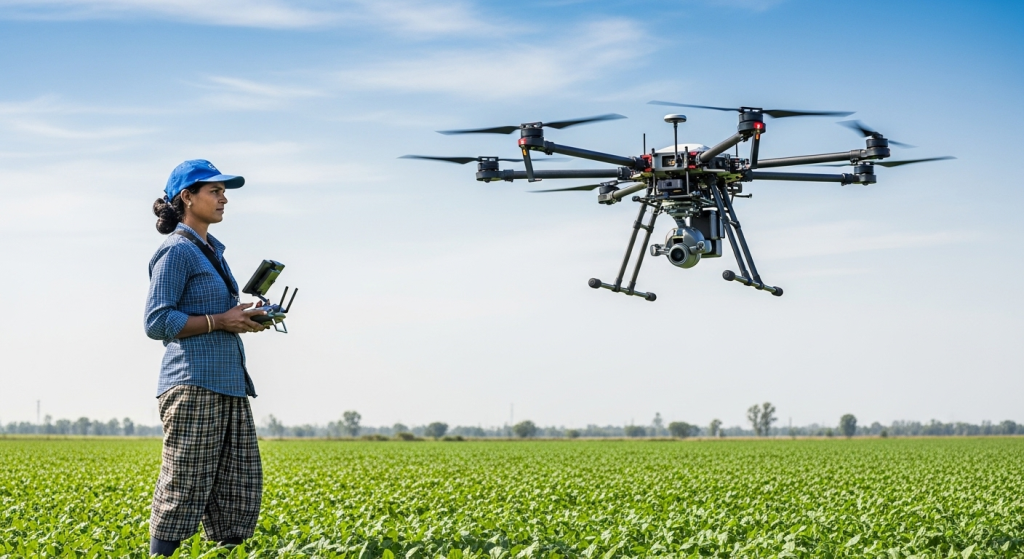
In a significant step towards agricultural modernization and rural women’s empowerment, the Central Government has announced the large-scale distribution of agricultural drones under the Namo Drone Didi scheme, with Punjab set to receive 1,021 drones, Haryana 583 drones, and Himachal Pradesh 75 drones. The figures were shared in the Lok Sabha this week, underscoring the government’s focus on enhancing farm productivity while creating new livelihood opportunities in rural India.
About the Scheme
The Namo Drone Didi programme was officially launched in November 2023 by Prime Minister Narendra Modi with the objective of providing drones to women-led Self Help Groups (SHGs) across the country. The total allocation under the programme is 14,500 agricultural drones for the period 2023–26, with the Ministry of Agriculture & Farmers Welfare spearheading its implementation.
The primary purpose of these drones is precision farming—particularly for spraying fertilizers and pesticides, monitoring crop health, and reducing manual labour. The technology is expected to significantly cut down water usage, reduce the dependency on chemical overuse, and increase yield efficiency.
Financial Support and Implementation
The scheme is backed by a ₹1,261 crore budget over three years. Each drone package comes with 80% financial assistance from the government, capped at ₹8 lakh. This means the SHGs have to bear only a small portion of the cost. The packages also include essential accessories like batteries, chargers, and safety kits.
The government has designated Lead Fertilizer Companies (LFCs) to supply the drones, provide DGCA-approved pilot training, and ensure post-sale maintenance support. This structure is intended to make the adoption process smoother for women with little or no prior technical experience.
Current Progress in States
According to government records presented in Parliament:
- Punjab has so far received 57 drones, with multiple SHG operators trained in safe flying techniques and basic maintenance.
- Haryana has received 102 drones and is training operators to integrate drone services with existing farming practices.
- Himachal Pradesh has received 4 drones, mainly for use in horticulture and high-altitude farming.
Training programmes are currently being conducted in collaboration with agriculture universities, drone manufacturers, and specialized training institutions.
Operational Challenges Reported
Despite the programme’s promising start, field studies have highlighted a few operational difficulties:
- Short battery life (ranging from 5 to 20 minutes per charge), which limits continuous operations.
- Transportation hurdles, as the drones and batteries are bulky and require careful handling.
- High vehicle rental costs for carrying drones to different fields, especially in remote areas.
These issues have been reported more prominently in southern states, where farm plots are more scattered, and in regions with difficult terrain. Nearly 43% of Drone Didis surveyed have indicated that transportation is their biggest obstacle.
Government’s Response to Challenges
To address the transportation issue, the Centre has decided to provide additional funding support under the Sub-Mission on Agricultural Mechanization (SMAM). This will enable SHGs to purchase multi-utility vehicles specifically for drone transport. Moreover, manufacturers are being encouraged to develop lighter drone models with longer battery life to make field operations more efficient.
Expected Benefits
Officials believe the initiative will:
- Create new income opportunities for rural women.
- Increase farm productivity through precise input application.
- Reduce input costs by optimizing pesticide and fertilizer usage.
- Expand the scope of SHGs from traditional activities like handicrafts and food processing to high-tech agricultural services.
As adoption spreads, local farmers are expected to hire Drone Didis for spraying and monitoring services, creating a steady revenue stream for SHGs while bringing cutting-edge technology to India’s farmlands.
